“A work of art is good just in case it embodies and/or advances understanding.”
—Catherine Z. Elgin
The 1st AoN Working Table on
Aesthetic Cognitivism
on the occasion of the
59th Venice Biennale of Art
Serra dei Gardini, Viale Giuseppe Garibaldi, Venice
November 24th, 2022
11:30am-1:30pm
The Association of Neuroesthetics Berlin (AoN_Platform for Art and Neuroscience) will hold its 1st AoN Venice Working Table on the topic of Aesthetic Cognitivism in collaboration with the EU H2020 project ARTIS (Art and Research on Transformations of Individuals and Societies; Humboldt-Universität zu Berlin/University of Vienna).
In an open format, philosophers, psychologists, and neuroscientists will discuss the transformative power of art. The epistemic gain that can be achieved through the arts has always been central to the field of aesthetics (Baumgarten 1750/58) and neuroesthetics alike (Zeki 1998, 1999). For this event, we aim to critically assess the value of empirical approaches to the arts. Each discussant will give a 5-10 minute input on a research question or topic they find pressing. This Working Table will be accompanied by a more artistic format in 2023 that will highlight artistic and curatorial perspectives on the topic.
The Working Table is funded by the H2020 ARTIS project.
The event is public and open for everybody. No sign-up is needed. For questions, please contact contact@association-of-neuroesthetics.org
ORGANIZERS Corinna Kühnapfel (ARTIS); Joerg Fingerhut (Scientific Director of the AoN_Association_of_Neuroesthetics)
VENUE Serra dei Giardini, Via Giuseppe Garibaldi, Venice, Italy See Map
DISCUSSANTS Matthew Pelowski, Joerg Fingerhut, Corinna Kühnapfel, Inês Hipólito, Roberta Dreon, Theresa Demmer (more tba)
PROGRAMME Each discussant will present a central idea regarding the study of the transformative potential of art or the novel epistemic access artworks provide. This can be followed by a question posed to empirical aesthetics/neuroesthetics address the potentials and limitations of empirical methods in the arts.
11.30
Joerg Fingerhut (Institute of Philosophy/Berlin School of Mind and Brain, Humboldt-Universität zu Berlin): Introduction to the AoN Venice Working Table; “Art as Remediation: Neuromediality and Neuroesthetics”
Roberta Dreon (Department of Philosophy and Cultural Heritage, Ca‘ Foscari University of Venice): “A Culture-Naturalist Perspective on Esthetics”
Corinna Kühnapfel (Department of Cognition, Emotion and Methods, University of Vienna): “The Value of Embodied and Enactive Accounts for Studying and Understanding Art Experience”
Coffee Break & Refreshments
12.45
Theresa Demmer (Department of Cognition, Emotion and Methods; University of Vienna): “What is the value of art by artificial intelligence? Do we differently engage with art by humans vs. non-humans?”
Inês Hipólito (Institute of Philosophy/Berlin School of Mind and Brain; Humboldt-Universität zu Berlin) AI, Predictive Processing and the Arts
Matthew Pelowski (Vienna Cognitive Science Hub/Department of Cognition, Emotion and Methods; University of Vienna): ”Tracking transformation, pleasure, and the societal implications of art—some empirical findings from the ARTIS project”
Optional joint visit of the 59th Venice Art Biennale: Giardini (15-18)
REFERENCES
Baumgarten, A. G. (1750). Aesthetica. impens. Ioannis Christiani Kleyb.
Elgin, C. Z. (2020). Understanding Understanding Art. In Vincent Granata & Roger Pouivet (Eds.), Épistémologie de l’Esthétique—Pespectives et débats (pp. 139–150). Presses Universitaire de Rennes.
Zeki, S. (1998). Art and the brain. Journal of Consciousness Studies, 6(6-7), 76–96.
Zeki, S. (1999). Inner vision: An exploration of art and the brain. Oxford University Press.
S/HE SPOKE ‘I AND I’ FOR WE
On the poiesis of collective mental healing
AoN Symposium
on the occasion of the
58th Venice Art Biennale of Art
Isola di San Servolo
May 10th, 2019
11am-6pm
The AoN (AoN_Association_of_Neuroesthetics) Venice Symposium 2019 will coincide with the first chapter of the year-long project Ultrasanity. On Madness, Sanitation, Antipsychiatry and Resistance on which the AoN collaborates with SAVVY Contemporary and that is funded by the TURN Fund of the German Federal Cultural Foundation (Kulturstiftung des Bundes).
Conceived as a mixed format of lectures, interventions, discussions, screenings and performances, the event will see the participation of sociologist Monica Greco, neuroscientist Vittorio Gallese, psychiatrist and artist Jaswant Guzder, actor and psychiatrist Vitor Pordeus, theatre director and activist Seydou Ndiaye, artists Pélagie Gbaguidi, Kader Attia, Sonya Lindfors and Diego Bruno, among others.
CONCEPT Elena Agudio (AoN), Ana Gomez-Carrillo (AoN), org
ORGANIZERS Elena Agudio & Joerg Fingerhut (Directors of the AoN_Association_of_Neuroesthetics)
PROGRAM
|
11:00 |
Bonaventure Soh Bejeng Ndikung WELCOME & INTRODUCTION |
|
11:10 |
Elena Agudio, Ana Gomez-Carrillo, Joerg Fingerhut CONCEPT NOTE |
|
11:30 |
Fredrick Hickling VIDEO INTERVENTION |
|
11:45 |
Vitor Pordeus: Madness Hotel PRESENTATION |
|
12:15 |
Seydou Ndiaye: Exercise PERFORMANCE |
|
12:45 |
Jaswant Guzder PRESENTATION |
|
13:15 |
BREAK |
|
14:00 |
Vittorio Gallese PRESENTATION |
|
14:30 |
Monica Greco PRESENTATION |
|
15:00 |
Patrick Vernon PRESENTATION |
|
15:30 |
Monica Greco, Jaswant Guzder, Seydou Ndiaye, Vitor Pordeus, Joao Biehl, Patrick Vernon, Vittorio Gallese DISCUSSION |
|
16:30 |
Psychiatric community of Fondazione Emilia Bosis PERFORMANCE |
|
11:00–17:00 |
Pelagie Gbaguidi DURATIONAL PERFORMANCE |
10 years of AoN_Association_of_Neuroesthetics
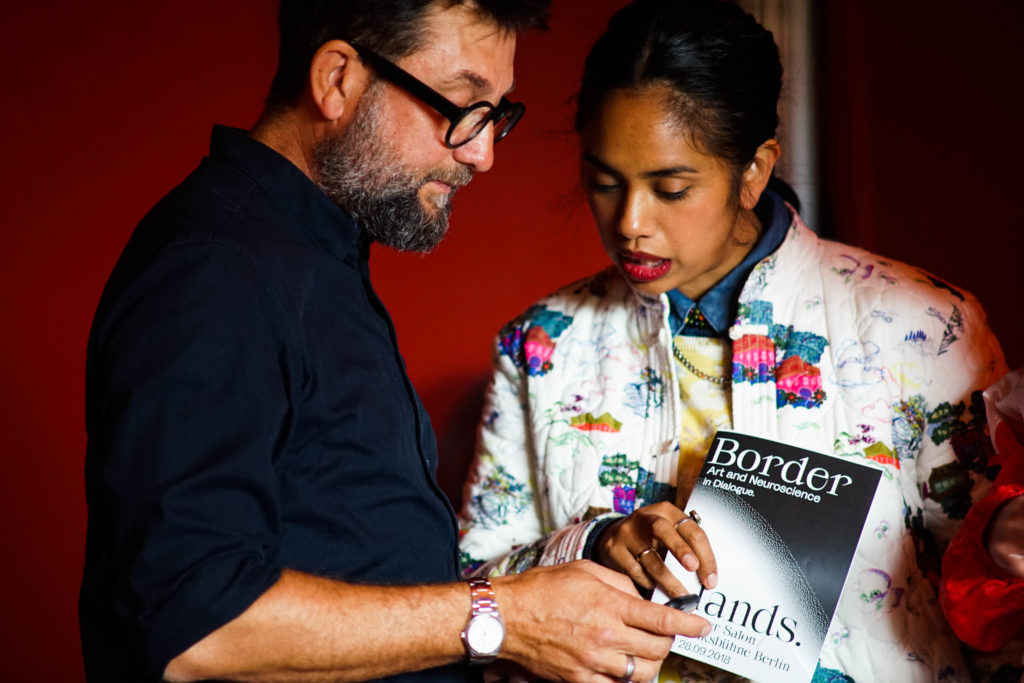
BORDERLANDS. ART AND NEUROSCIENCE IN DIALOGUE
Roter Salon, Volksbühne Berlin
September 28, 2018
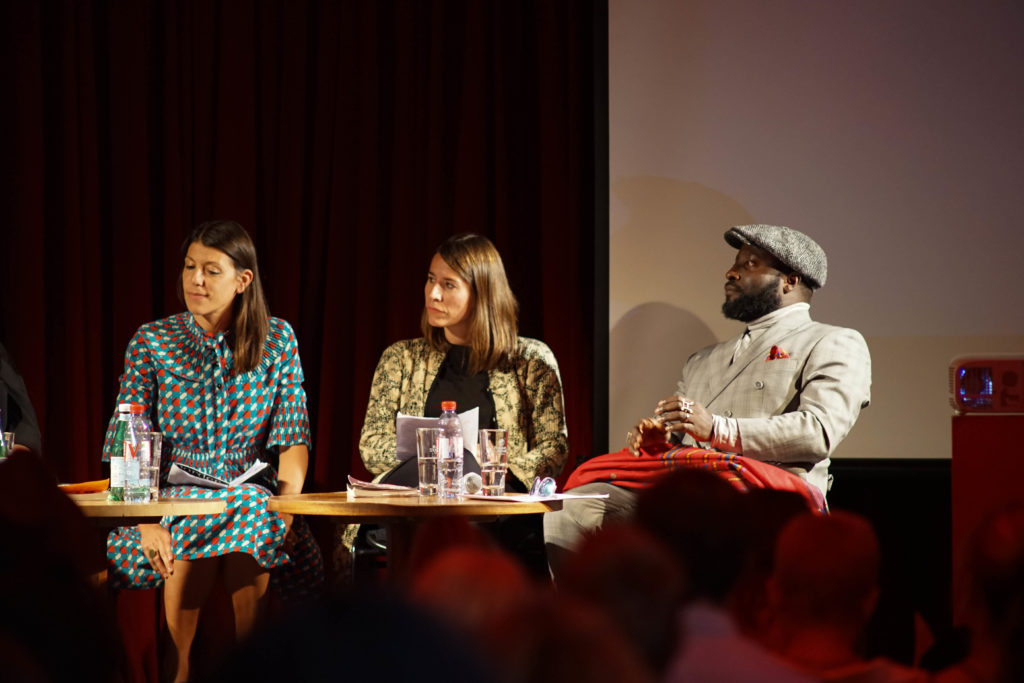
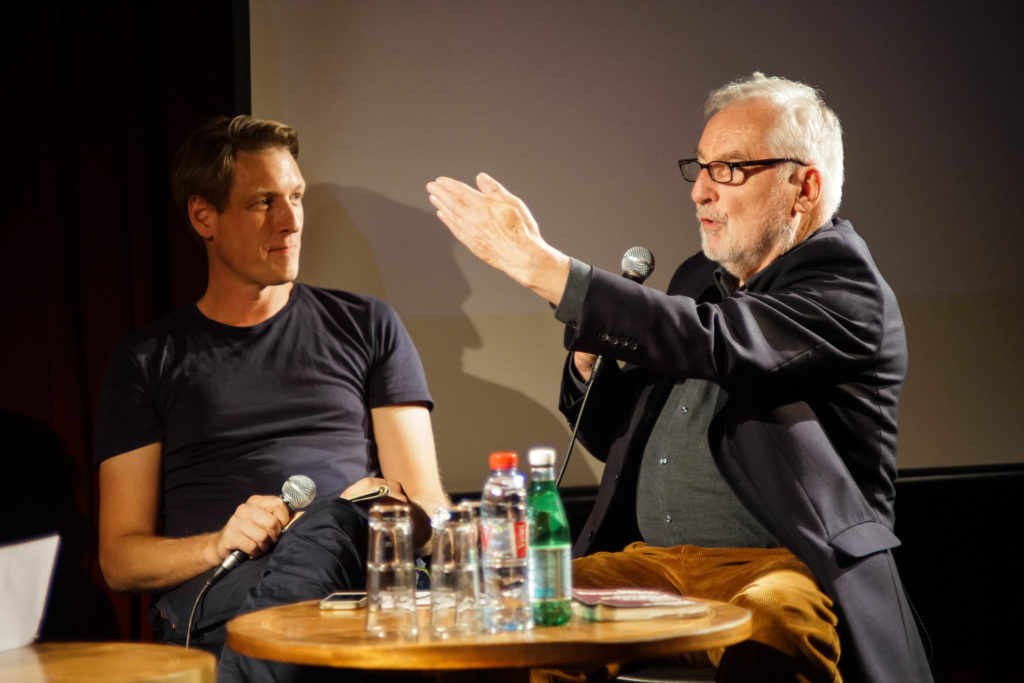
In 2018 the AoN (AoN_Association_of_Neuroesthetics) celebrated its 10th anniversary. With the generous support of the Abbushi family, we brought together neuroscientists, neuro-estheticians, critics of neuroesthetics, artists, poets, curators, as well as friends and family of the AoN to celebrate this event. Over the course of one day at the “Rote Salon”, we discussed in four panels (dedicated to poetry, psychiatry, the history and future of the AoN, and the most recent developments in neuroesthetics) current developments and engaged in artistic presentations and aesthetic experiences (see the leaflet of the event), followed by an afterparty with Lamin Fofana.
(For more info, see also the summary by Corinna Kühnapfel.)